01 / Product Overview
316L Is a Material Direction, Not a Fixed Fan Model
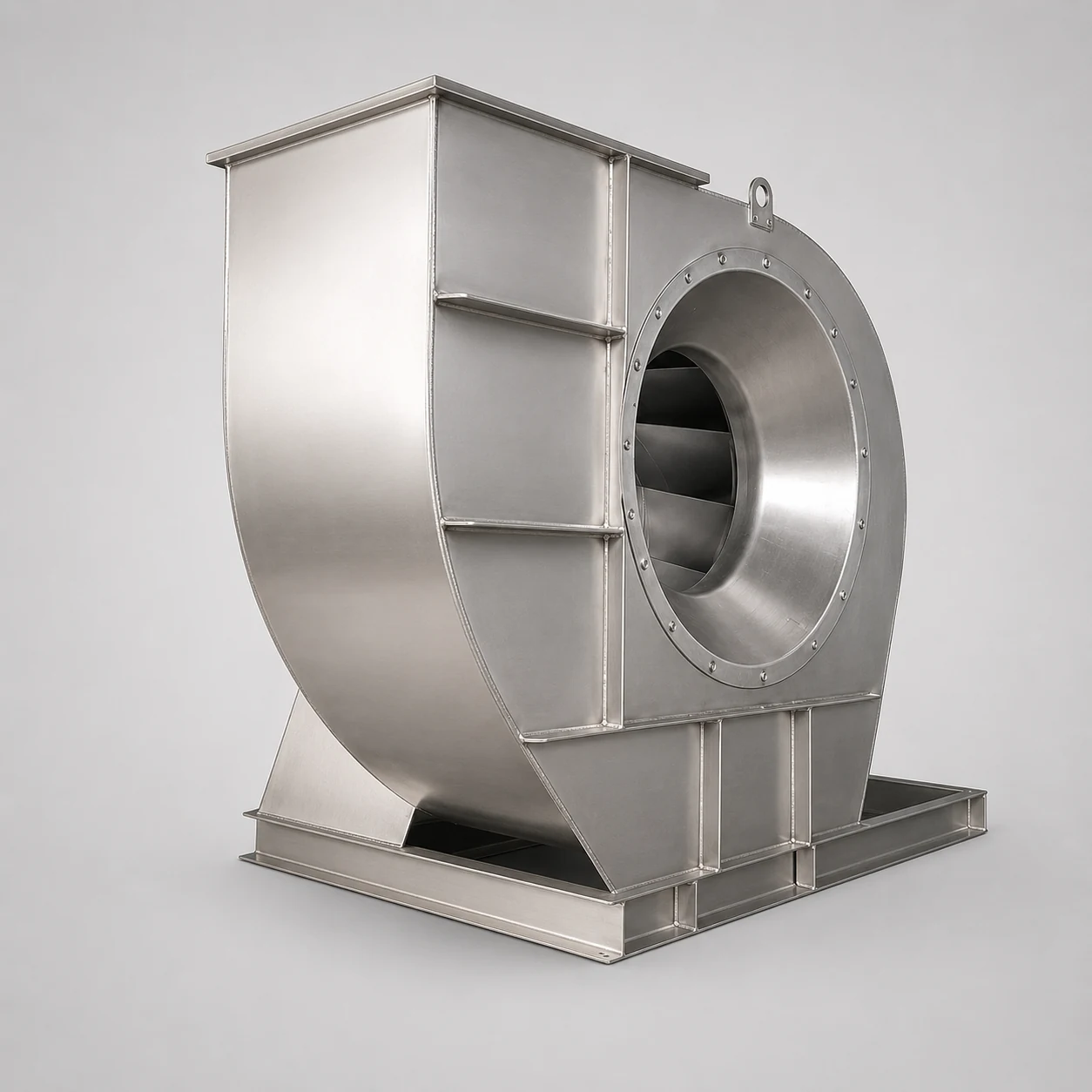
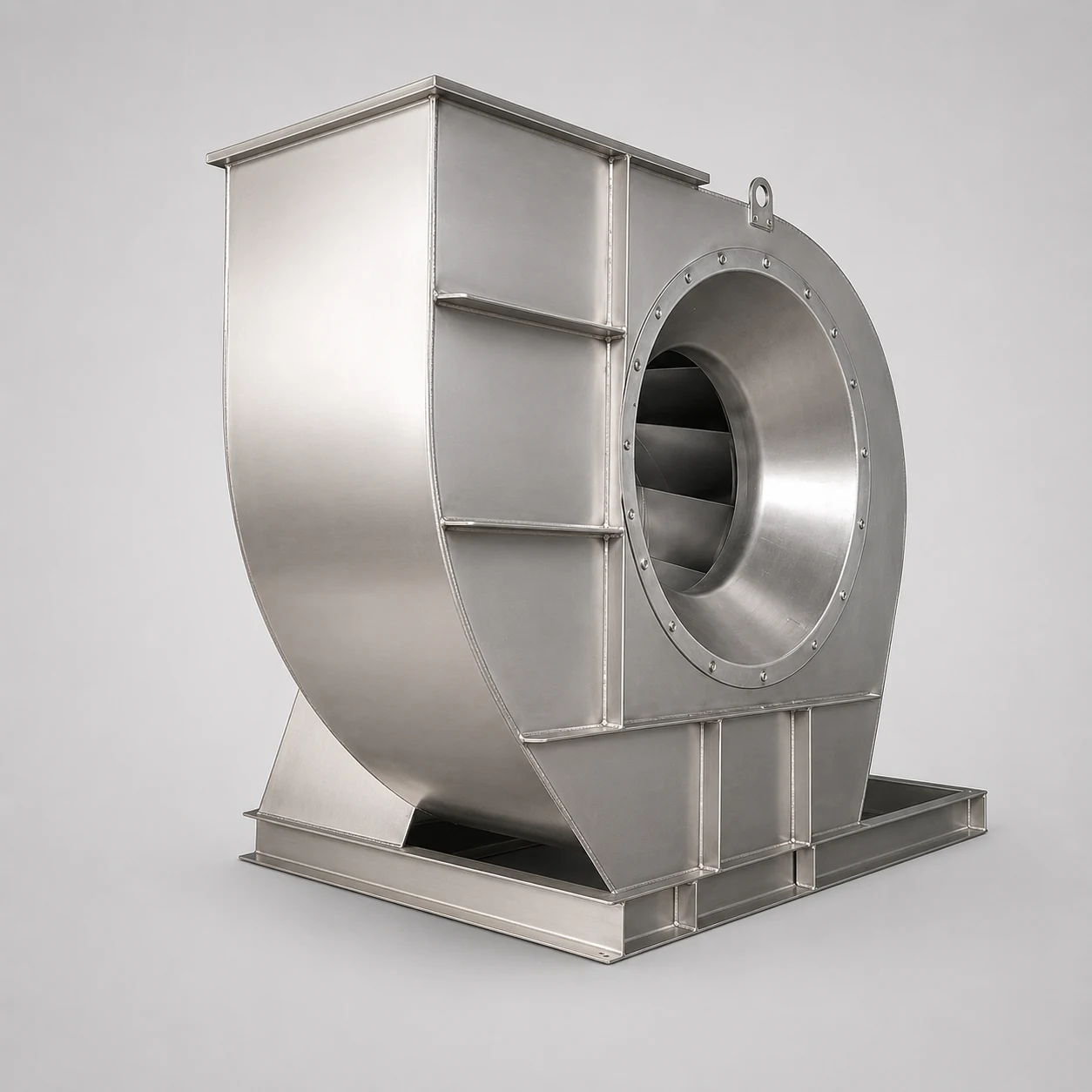
The QIYUE FAN 316L Stainless Steel Corrosion-Resistant Centrifugal Fan is a project-configured solution for wet process exhaust, scrubber systems, humid chemical ventilation and selected chloride-risk environments.
Airflow, pressure and system resistance determine the centrifugal fan platform. Gas chemistry, operating temperature, chloride level, condensation, liquid carryover and fan position determine whether 316L is a suitable material direction.
Depending on exposure, the fan can use full 316L construction, 316L casing and impeller, selected gas-contact components or a hybrid configuration. External supports, bearings, drive components and the motor are confirmed separately.
Important: the phrase "316L stainless steel fan" does not by itself establish chemical compatibility. The liquid and condensate condition can be more severe than the gas description alone.
02 / Material Decision Boundary
Where 316L Fits - and Where It May Not
316L can be a strong material direction for many wet industrial duties, but final selection must follow the actual medium, temperature, condensate, deposits and operating cycle.
OFTEN CONSIDERED
Suitable Direction
Wet industrial exhaust
Selected scrubber outlet gas
Washdown-area ventilation
Coastal humid industrial air
Selected chemical ventilation
DETAILED REVIEW
Do Not Select by Name Alone
Chloride-containing condensate
Intermittent liquid carryover
Mixed chemical vapors
Wastewater odor-control gas
Deposits, crevices and stagnant zones
POTENTIAL UPGRADE
Consider Other Materials
Hot concentrated chlorides
Severe acid mixtures
Continuous aggressive condensate
High corrosion plus abrasion
Critical chemical-process duty
03 / 304 vs 316L
Choose by Exposure, Not by Grade Ranking
316L generally provides a stronger direction for many wet and chloride-risk duties, but neither 304 nor 316L is universally suitable for every corrosive gas or condensate.
SELECTION FACTOR
304 STAINLESS
316L STAINLESS
General Position
Humid air and mildly corrosive process exhaust
More demanding wet duty and selected chloride-risk service
Condensation
Review required when condensate contains chemicals or salts
Often considered, but concentrated or stagnant condensate remains a risk
Chloride Exposure
Limited direction for saline or chloride-rich conditions
Improved direction, subject to concentration, temperature, deposits and crevices
When to Escalate
Move to 316L or another material as wet chemical exposure becomes more demanding
Review PPH, PVDF, FRP, titanium or special alloy directions for severe media
04 / Wet Process Exhaust Route
The Fan Position Changes the Material Duty
A fan located before a wet scrubber can face a very different medium from a fan installed after the scrubber and mist eliminator. Material selection should follow the gas reaching the fan position.
01
Process Source
Chemical tanks, process equipment, washing lines or other wet process points generate the exhaust.
02
Gas Collection
Hoods, enclosures and ductwork capture the exhaust and establish the required negative pressure.
03
Wet Scrubber
The scrubber reduces contaminants but can increase humidity, droplets and condensate risk.
04
Mist Eliminator
Mist-removal performance affects liquid carryover, deposits and downstream fan reliability.
05
316L Fan / Stack
The fan material is selected from the actual gas reaching this position.
Fan After the Scrubber
The fan may handle cooler, highly humid gas with possible droplet carryover and condensate. Scrubber chemistry and mist eliminator performance remain important.
Fan Before the Scrubber
The fan may face untreated gas with higher contaminant concentration, higher temperature and a more severe corrosion duty. 316L may not be sufficient.
05 / Typical Applications
Wet and Corrosive Process Duties
Each application still requires a medium-specific review before final material confirmation.
Wet Scrubber Exhaust
Selected scrubber outlet duties after reviewing scrubbing liquid, outlet chemistry, droplet carryover and condensate.
Wastewater Treatment
Selected wet rooms, tank zones, sludge areas and odor-control systems after identifying hydrogen sulfide and chemical compounds.
Humid Chemical Exhaust
Wet vapor, intermittent condensation and selected chemical exhaust with known composition and operating temperature.
Coastal & Salt-Laden Air
Industrial ventilation in high-humidity coastal areas subject to salt concentration, deposits and saline condensate review.
Pharmaceutical Washdown
Utility exhaust and cleanable metallic fan construction where surface finish and hygiene requirements are separately specified.
Selected Chloride-Risk Duty
Applications where 316L is evaluated against 304, FRP, titanium or another project-specific material direction.
06 / Material Boundary
Not Every Component Must Be 316L
Every component exposed to the conveyed gas should be identified, even when isolated external mechanical components use a different material.
GAS-CONTACT COMPONENTS
Possible 316L Scope
Fan casing
Impeller
Inlet cone
Inspection door and drain
Internal fasteners
Shaft sleeve and transition pieces
EXTERNAL MECHANICAL COMPONENTS
Separately Selected Scope
Base frame
Bearing pedestal
Motor support
Coupling or belt guard
External fasteners
Motor, bearings and transmission parts
Not every component must be 316L, but every exposed component must be identified.
07 / Corrosion Risk Screening
Escalate Material Review as the Duty Becomes More Severe
This ladder is a project-screening tool rather than a chemical compatibility chart.
Level 1 - Humid Air
Moisture and general industrial contamination without severe chemistry.
316L usually not required
Level 2 - Wet Process
High humidity, washdown conditions or selected scrubber outlet gas.
316L often considered
Level 3 - Chloride Risk
Chlorides, deposits, crevices or intermittent saline condensate.
Detailed review required
Level 4 - Hot / Mixed Duty
Elevated temperature, stress, mixed chemicals or concentrated deposits.
Compare higher-grade materials
Level 5 - Severe Chemical
Critical acid, chloride, condensate or corrosion-plus-abrasion service.
Special material review
When 316L Is Not the Endpoint
Compare Non-Metallic and Titanium Directions
A higher stainless grade is not automatically the best solution. Chemical compatibility, temperature, pressure, abrasion and structural requirements should be reviewed together.
PPH Fan
Non-metallic direction for compatible chemical exhaust at suitable temperature, pressure and structural load.
PVDF Fan
Fluoropolymer direction for selected aggressive chemical media subject to duty and fabrication review.
FRP Fan
Composite-material direction for many compatible acid-mist and chemical-exhaust duties.
Titanium Fan
Metallic direction for selected severe corrosive media where compatibility and project economics justify the material.
Key Construction Points
Wet-System Construction Details Matter
Casing
Thickness, reinforcement, drainage and maintenance access depend on fan size and duty.
Impeller
Blade type follows pressure, efficiency, droplets, fouling and particle conditions.
Inlet
Alignment, concentricity and inlet clearance affect stable aerodynamic operation.
Drainage
Low points and stagnant-liquid zones should be reviewed carefully in wet systems.
Shaft Protection
Exposed shaft sections may require a 316L or separately confirmed material sleeve.
Drive
Direct, belt or coupling drive follows fan size, speed, temperature and maintenance requirements.
316L Fabrication Route
Material Control Must Continue Through Production
316L fan reliability depends not only on the specified material grade, but also on traceability, fabrication cleanliness, welding control, surface-treatment requirements and rotor quality.
01
Material Verification
Confirm grade, thickness, component scope and certificate requirements.
02
Cutting & Forming
Control contamination, forming geometry and flange alignment.
03
Controlled Welding
Manage filler, heat input, sequence, distortion and weld continuity.
04
Cleaning / Passivation
Confirm whether weld cleaning, pickling or passivation is required.
05
Dynamic Balancing
Balance the fabricated impeller to the agreed project acceptance criteria.
06
Final Inspection
Check dimensions, alignment, trial operation, vibration and packing.
09 / Project Review Checklist
Send the Process Conditions and Fan Duty Together
Material selection cannot be separated from the actual fan position, operating point, condensate and drainage conditions.
Process & Medium Data
Gas composition: main and trace components
Chloride level: gas, liquid and condensate
pH and chemistry: oxidizing or reducing condition
Temperature: normal, maximum and shutdown
Condensation: dew point and stagnant-liquid risk
Droplet carryover: mist eliminator and drainage data
Fan & Project Data
Airflow: normal and maximum duty
Pressure: static or total pressure
Fan position: before or after scrubber
Drive type: direct, belt or coupling
Material scope: full 316L or gas-contact parts
Documentation: certificates, traceability and surface finish
Related Selection Paths
Continue by Material or Exhaust-System Position
10 / Buyer FAQ
316L Stainless Steel Fan Questions
Is 316L suitable for every chloride-containing gas?
No. Chloride concentration, temperature, deposits, crevices, stress and condensation can still cause localized corrosion. The liquid or condensate condition can be more important than the gas name alone.
What is the practical difference between 304 and 316L fan construction?
304 is commonly reviewed for humid and mildly corrosive air. 316L is generally considered for more demanding wet duty and selected chloride-risk conditions, but neither grade is universally suitable.
Can a 316L fan be used after a wet scrubber?
It may be suitable after reviewing scrubbing liquid, outlet chemistry, droplet carryover, condensate, drainage and mist eliminator performance.
When should PPH, PVDF or FRP be compared with 316L?
Compare non-metallic materials when the chemical medium is compatible and the operating temperature, pressure, structural load and abrasion are within the material limits.
When should titanium be reviewed instead of 316L?
Titanium may be reviewed for selected severe corrosive media or chloride-rich duties when compatibility, fabrication requirements and project economics justify the material.
Does the complete fan need to be made from 316L?
Not always. Gas-contact components can use 316L while isolated external supports and mechanical parts use separately selected materials. The exposure boundary should be defined component by component.
Can the fan handle liquid droplets?
Limited incidental moisture may be reviewed. Persistent carryover can cause deposits, imbalance, erosion, vibration and concentrated corrosion, so mist elimination and drainage require evaluation.
Can material certificates and performance curves be supplied?
Material certificates can be supplied when specified before production. A performance curve can be prepared after the fan size, speed and duty point are confirmed.