01 / Engineering Overview
Mine Main and Auxiliary Ventilation Across a Wide Duty Range
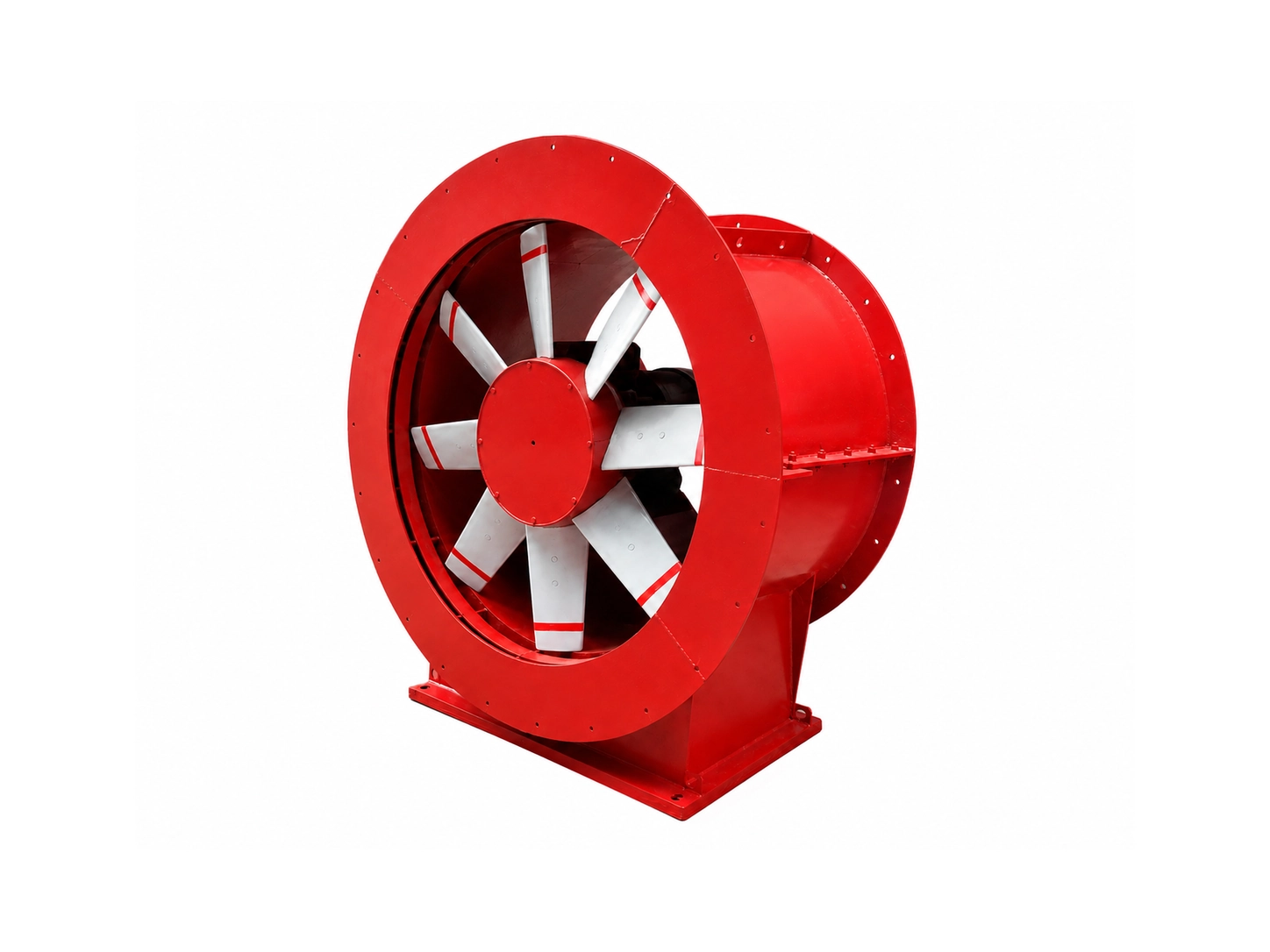
K / DK series mine ventilation fans are intended for mine ventilation systems that require matching between airflow demand, pressure requirement and the resistance of the underground ventilation network. They can be used as main ventilation fans or auxiliary ventilation fans according to the project layout.
K40 and K45 are single-stage axial flow fan series. DK40 and DK45 use a counter-rotating axial arrangement with two matched fan stages. The different structures allow the series to cover different airflow and pressure requirements.
01 / AIRFLOW
Match Mine Ventilation Demand
The required airflow should be determined from the actual mine ventilation capacity and working conditions.
02 / PRESSURE
Overcome Network Resistance
Pressure selection should match mine roadway resistance and the actual ventilation network operating point.
03 / STRUCTURE
Choose K or DK Arrangement
Single-stage K and counter-rotating DK configurations serve different airflow and pressure requirements.
Selection principle: the model should not be selected only from motor power or fan number. Airflow, pressure, roadway resistance, installation position and electrical conditions should be reviewed together.
02 / Series Structure
K40 / K45 and DK40 / DK45 Configuration Differences
The K / DK range uses different axial fan structures to cover changing mine ventilation duties. Final configuration should be selected according to the required operating point rather than series name alone.
ITEM
CONFIGURATION
SELECTION MEANING
Available Series
K40 / K45 / DK40 / DK45
Different series cover different airflow and pressure requirements
Fan Number
No.7–No.26
Selected according to airflow, resistance and installation space
Fan Structure
Single-stage axial / Counter-rotating axial
K type is single-stage; DK type uses two counter-rotating stages
Speed
1450 / 980 / 730 r/min
Different speeds match different fan sizes and operating points
Blade Angle
Adjustable according to model
Allows airflow and pressure adjustment when mine conditions change
Reverse Airflow
Available
Can support reverse ventilation where required by the mine ventilation strategy
03 / Typical Applications
Mine Ventilation and Underground Airflow Applications
01 / MAIN FAN
Mine Main Ventilation
Used as main ventilation equipment for mine ventilation stations where airflow and pressure must match the resistance of the mine ventilation network.
02 / AUXILIARY
Auxiliary Ventilation
Suitable for auxiliary ventilation and multi-fan ventilation arrangements where different sections of the underground network require airflow support.
03 / UNDERGROUND
Tunnel and Underground Projects
Can be reviewed for underground engineering and tunnel ventilation where the required airflow and system resistance fit the K / DK operating range.
04 / INDUSTRIAL
Large Enclosed Ventilation
The series can also be considered for large enclosed ventilation duties where airflow, pressure and installation conditions are compatible with the fan range.
05 / Performance Guide
How to Read K / DK Mine Fan Performance Data
The performance table should be used as a preliminary screening tool. Airflow and pressure must be checked together because the mine ventilation network determines the actual operating point.
01
Series
Identifies K40, K45, DK40 or DK45 fan structure and performance direction.
02
Fan Number
Represents the size direction within the fan series and should not be used alone for selection.
03
Speed
The listed speed corresponds to the representative fan configuration and operating range.
04
Airflow
Required air volume must match the ventilation capacity needed by the mine or underground network.
05
Pressure
Pressure should be checked against mine roadway resistance and the complete ventilation network.
06
Power
Motor power follows the selected fan configuration and operating point rather than being the primary selection input.
06 / Selection Logic
What Determines K / DK Mine Fan Selection
Mine ventilation fan selection should begin with the ventilation system requirement. If the exact pressure is not yet available, mine roadway resistance and the available ventilation design information should be supplied for review.
01
Required Airflow
Provide the required ventilation airflow or mine ventilation capacity.
02
Pressure / Resistance
Provide required pressure or the mine roadway resistance used for the ventilation design.
03
Main or Auxiliary
Confirm whether the fan is intended for a main ventilation station or auxiliary ventilation duty.
04
Installation Position
Confirm surface or underground installation and the available installation space.
05
Reverse Airflow
State whether reverse ventilation operation is required by the project.
06
Electrical Supply
Provide voltage, frequency and project motor or control requirements.
07
Site Conditions
Provide altitude, air temperature and other operating conditions that may affect the final fan configuration.
Pressure not available? Send the required airflow together with mine layout or ventilation-network information and the available roadway resistance data. The fan should be selected against the actual system requirement.
07 / Installation Review
Surface, Underground and Multi-Fan Ventilation Arrangements
K / DK fans can be considered for different mine ventilation layouts. Installation position should be confirmed before final selection because available space and system arrangement influence the practical fan configuration.
Surface Installation
For surface ventilation-station layouts, confirm the required airflow, pressure, connection arrangement and available installation area.
Underground Installation
For underground installation, confirm available space, access conditions and the ventilation network operating requirement.
Multi-Fan Operation
Where several fans operate within one ventilation network, the operating points should be reviewed as part of the complete system rather than independently.
Reverse Ventilation
If reverse airflow is required, identify this during selection so that the final fan arrangement can be reviewed for the required operating mode.
08 / Product Characteristics
Key Characteristics of the K / DK Mine Ventilation Range
Energy-Saving Series Design
The series is positioned for mine ventilation duties where long-term operating efficiency and operating-point matching are important.
Wide Operating Range
K40, K45, DK40 and DK45 provide different airflow and pressure directions across multiple fan numbers and speeds.
Reversible Airflow
Reverse airflow operation can be considered where the mine ventilation strategy requires it.
Adjustable Blade Angle
Blade-angle adjustment is available according to model and can be used to match changing airflow and pressure demand.
Surface or Underground Use
The fan range can be arranged for surface or underground installation according to the project layout.
Engineering Selection Support
Model direction can be reviewed from airflow, pressure, mine resistance, installation conditions and electrical requirements.
09 / FAQ
K / DK Mine Ventilation Fan Questions
What is the difference between K and DK mine fans?
K40 and K45 are single-stage axial fan series. DK40 and DK45 use a counter-rotating axial arrangement with two matched fan stages.
Can K / DK fans be used as mine main fans?
Yes. The range can be used for main or auxiliary ventilation when the selected airflow, pressure and installation arrangement match the project requirement.
Can the fan be installed underground?
Surface and underground installation directions are available. The actual installation position and available space should be confirmed during selection.
Can airflow be adjusted when mine conditions change?
Blade-angle adjustment is available according to model. The operating point should still be checked against the mine ventilation network after any duty change.
Can K / DK fans support reverse ventilation?
Reverse airflow operation is available within the product direction. State the required reverse-ventilation duty when requesting selection.
How do I choose between K40, K45, DK40 and DK45?
The choice depends on the required airflow and pressure, mine roadway resistance, installation space and whether a single-stage or counter-rotating configuration better matches the operating point.
What information is required for a quotation?
Send required airflow, pressure or mine resistance, mine type, main or auxiliary duty, installation position, power supply, reverse-airflow requirement and quantity.