

IN THIS GUIDE
A cement plant may use fans on a kiln, cooler, dedusting line, material-transfer system or building ventilation. Each duty has a different process load, gas condition, dust exposure and control strategy. Good cement plant fan monitoring compares readings under similar conditions and looks for trends; one pressure, current or vibration reading is not a diagnosis by itself.
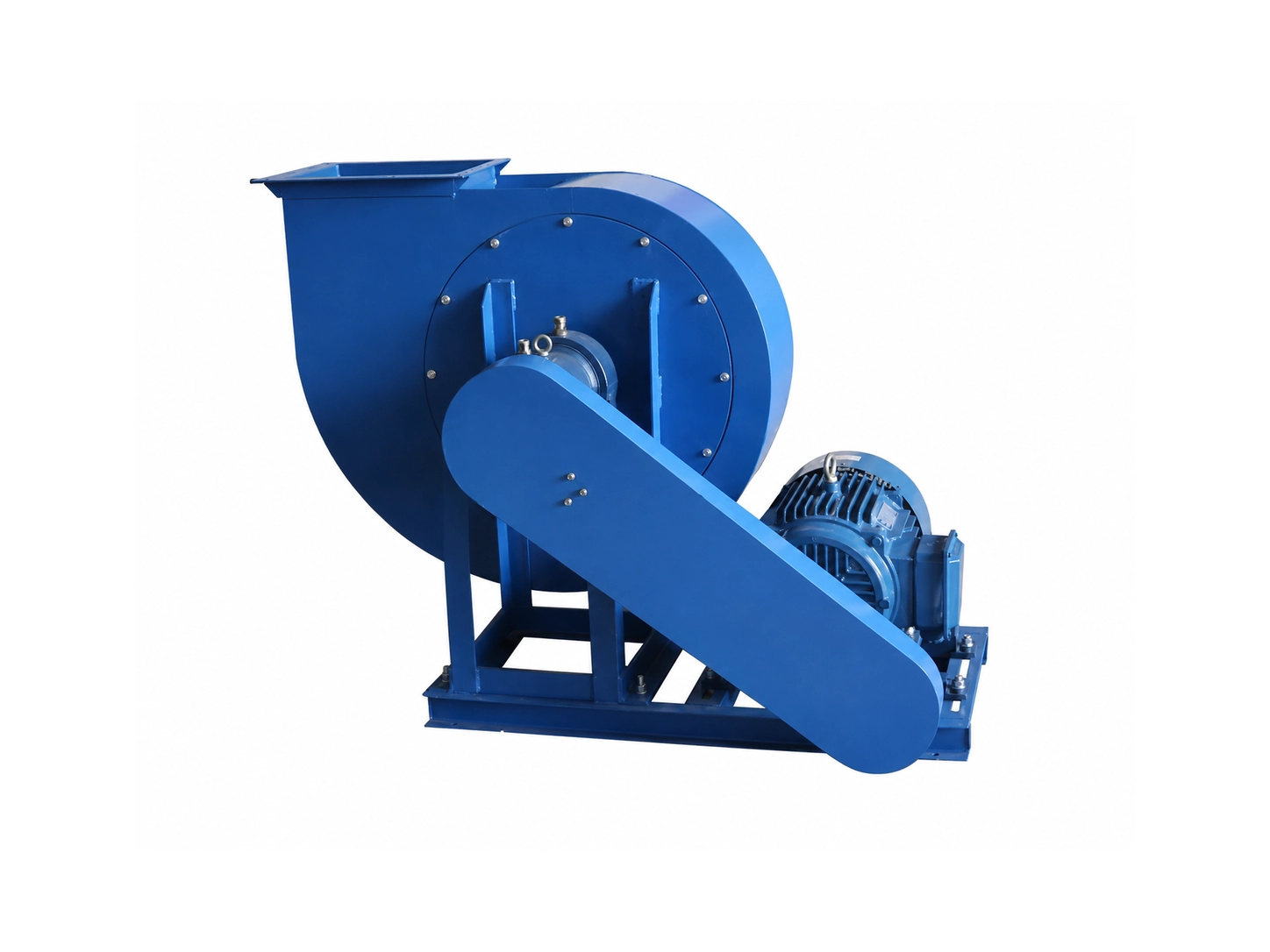
Representative product image: This C6-48 dust-collection fan is an equipment example, not a photograph of a specific cement-plant installation.
01. Establish a baseline at a known duty
Choose a stable production period and record the conditions that affect the fan. Keep the baseline with the equipment record so future readings can be compared fairly.
- Record the fan tag, model, serial number, impeller or wheel details, rotation, motor nameplate data and drive type.
- Record plant throughput or process state, fan speed, VFD frequency, damper position and any bypass or recirculation setting.
- Note the measurement point, instrument, units and date. Use the same approved measurement locations when practical.
- Save the applicable fan curve, system drawing and commissioning readings. Confirm that the curve matches the installed fan configuration and stated operating conditions.
02. Log the readings that describe the system
| Reading | Record with it | Why it helps |
|---|---|---|
| Airflow or a validated process proxy | Process load, test method and location | Shows whether the required air movement is being maintained. |
| Inlet and outlet pressure | Pressure type, tap location, units and damper position | Helps separate a fan change from a system-resistance change. |
| Speed and control setting | VFD frequency, control mode and set point | Prevents comparing different operating points as if they were alike. |
| Motor current or power | Supply condition, phase readings where available and process load | Provides context for changes in fan load; compare with nameplate and approved limits. |
| Bearing temperature and vibration | Sensor location, instrument and trend history | Can reveal a developing mechanical change when assessed against the machine's own baseline. |
| Visual condition | Dust buildup, corrosion, loose supports, unusual noise or leakage | Connects instrument trends to an observable system condition. |
03. Interpret changes in context
If airflow falls while pressure changes, first verify the measurement and operating conditions. Check whether a damper moved, a filter or duct became more restrictive, a branch was added, or leakage changed the system. The installed fan's operating point is where its performance interacts with the system resistance; laboratory curve data alone cannot explain every field reading.
If current or power changes while production and speed are stable, check the drive and supply data alongside the pressure and airflow readings. If vibration, bearing temperature or sound changes, compare it with the equipment's established baseline and the manufacturer's instructions. Do not apply a generic alarm number across different fan sizes, bearings, speeds and measurement methods.
04. Use a repeatable review sequence
- Confirm the instrument, units, sensor location and process state.
- Compare the reading with the baseline at a similar speed, damper position and load.
- Check accessible operating settings and the system for a changed filter, blocked screen, open access door, leak or recent duct modification.
- Escalate a persistent or fast-changing condition through the plant's maintenance process. Any inspection inside a guarded or energized machine must follow site energy-isolation and permit procedures and be performed by authorized personnel.
05. Prepare a useful technical review package
For a fan supplier or maintenance review, send the fan nameplate, fan curve, system drawing, recent airflow and pressure readings, speed and damper settings, motor data, vibration or temperature trend, process state and clear photos of the inlet and outlet arrangement. Include when the change began and any recent maintenance or process modifications.
Frequently asked questions
Can pressure alone confirm the fan airflow?
No. Pressure is useful only with a defined measurement point, the correct pressure type and the system operating condition. Use an approved airflow measurement or a validated process indicator where available.
Is there one vibration or bearing-temperature limit for every fan?
No universal limit should replace the fan manufacturer's instructions, the site's alarm basis and a repeatable measurement method. Trend the same locations and escalate readings against the equipment-specific criteria.
Should the fan be replaced when airflow falls?
Not before checking the operating point and system. A changed filter, damper, duct, inlet condition, speed or process load can change delivered airflow without proving that the fan itself is undersized.
Related references
- How to read an industrial fan performance curve
- Static pressure vs. total pressure in industrial fans
- U.S. Department of Energy: Fan Systems
- AMCA Publication 203: Field Performance Measurement of Fan Systems
Need a fan-performance review? Send the fan model, required duty, system drawing and measured operating data to sales@qiyuefan.com. QIYUE FAN can review the information needed for a project-specific discussion.