

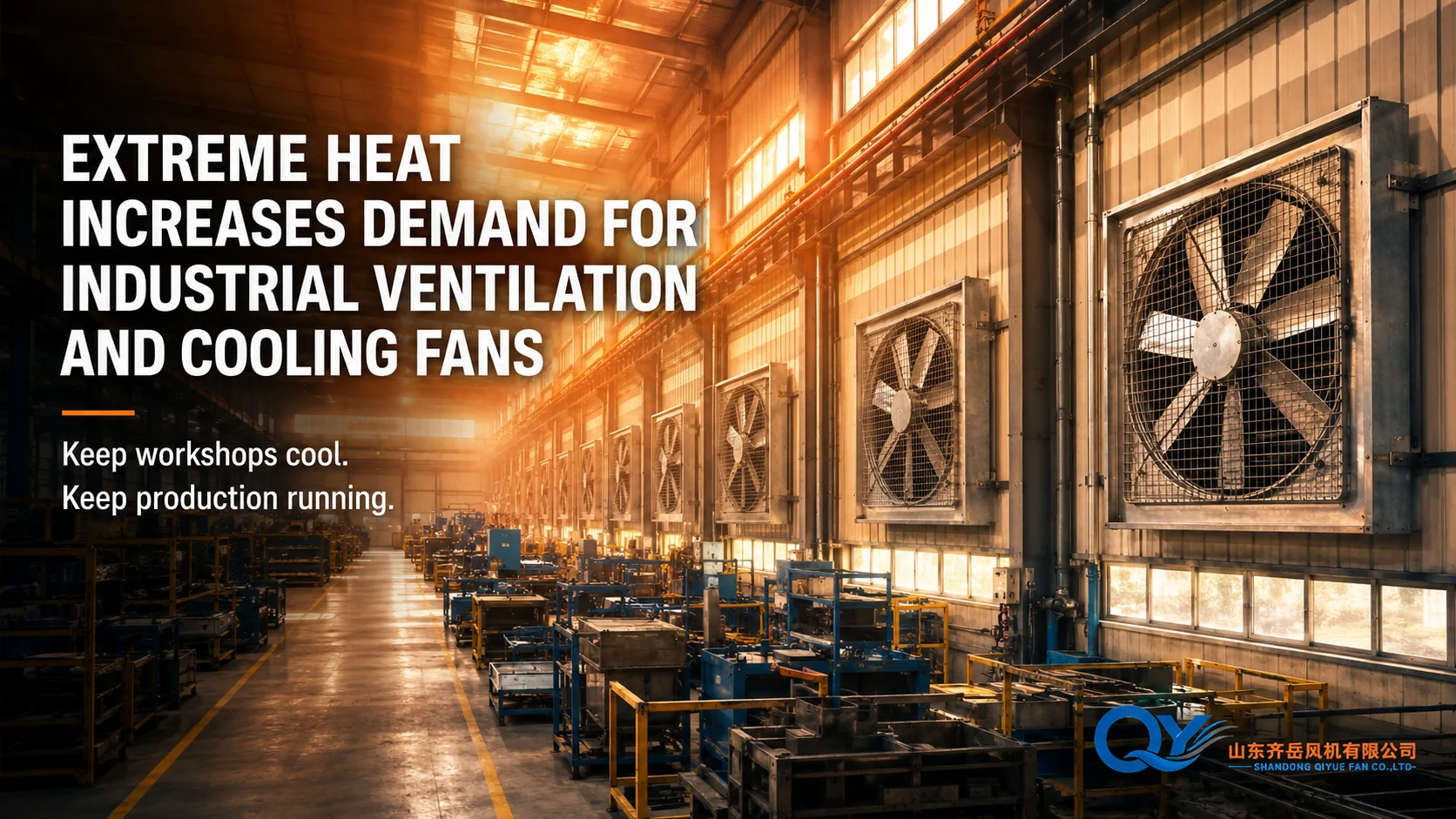
Higher summer temperatures are pushing more attention toward cooling and ventilation.
Factories need better airflow paths to remove heat, fumes and stagnant air.
Different spaces may need wall fans, ducted axial fans or centrifugal ventilation fans.
Heat-load, building size and ventilation route should be confirmed before quotation.
Why Does Extreme Heat Matter for Industrial Ventilation?
Extreme heat does not only affect residential cooling. In factories and industrial workshops, high ambient temperature can make indoor heat accumulation, poor air circulation, equipment heat release and worker comfort more difficult to manage.
For industrial buyers, this means ventilation planning should move earlier in the project. Airflow volume, air-change direction, hot-air exhaust path, equipment layout and control method should be discussed before selecting axial flow fans, centrifugal ventilation fans or roof exhaust systems.
Europe's Heatwaves Are Pushing Cooling and Ventilation Higher on the Agenda
Recent European climate discussions increasingly describe extreme heat as a growing challenge. Heatwaves are becoming longer, hotter and more frequent, while cooling demand is becoming a more visible part of electricity and building-system planning.
While much of the public discussion focuses on air conditioning in homes and commercial buildings, industrial sites face a different question: how to move large volumes of air efficiently through workshops, warehouses, production lines and heat-generating equipment areas.
This is where industrial ventilation fans become part of the cooling conversation. They cannot replace all active cooling systems, but they can help remove hot air, improve air exchange, support process ventilation and reduce stagnant high-temperature zones.
Extreme heat affects different industrial spaces in different ways. Some facilities need general air exchange, while others need high-temperature exhaust, equipment cooling or ducted air movement.
Production halls may require wall-mounted axial fans, roof exhaust fans or ducted systems to remove accumulated heat.
Large storage buildings can develop hot-air layers near the roof and may need air exchange or destratification planning.
Motor rooms, compressor rooms and mechanical rooms may need targeted exhaust or pressure-supported cooling airflow.
Drying ovens, furnaces and thermal process lines may need high-temperature exhaust or circulation fans.
Ventilation must consider both heat and fumes when welding, cutting or grinding operations are present.
Older workshops may need a more systematic ventilation plan as summer heat events become more frequent.
What Data Should Buyers Prepare Before Asking for a Cooling Fan Quotation?
A cooling or ventilation fan quotation should not begin with only the fan diameter or motor power. Industrial air movement depends on the building size, heat source, required air changes, duct resistance and the airflow route from inlet to outlet.
For open workshops, axial flow fans may be suitable for large-volume air exchange. For ducted systems or higher resistance paths, centrifugal ventilation fans may be required. For hot-gas or process exhaust, temperature and material review become more important.
The key is to match the fan to the actual heat and airflow problem instead of choosing a fan only by size.
Axial Flow Fans for Large-Volume Workshop Air Exchange
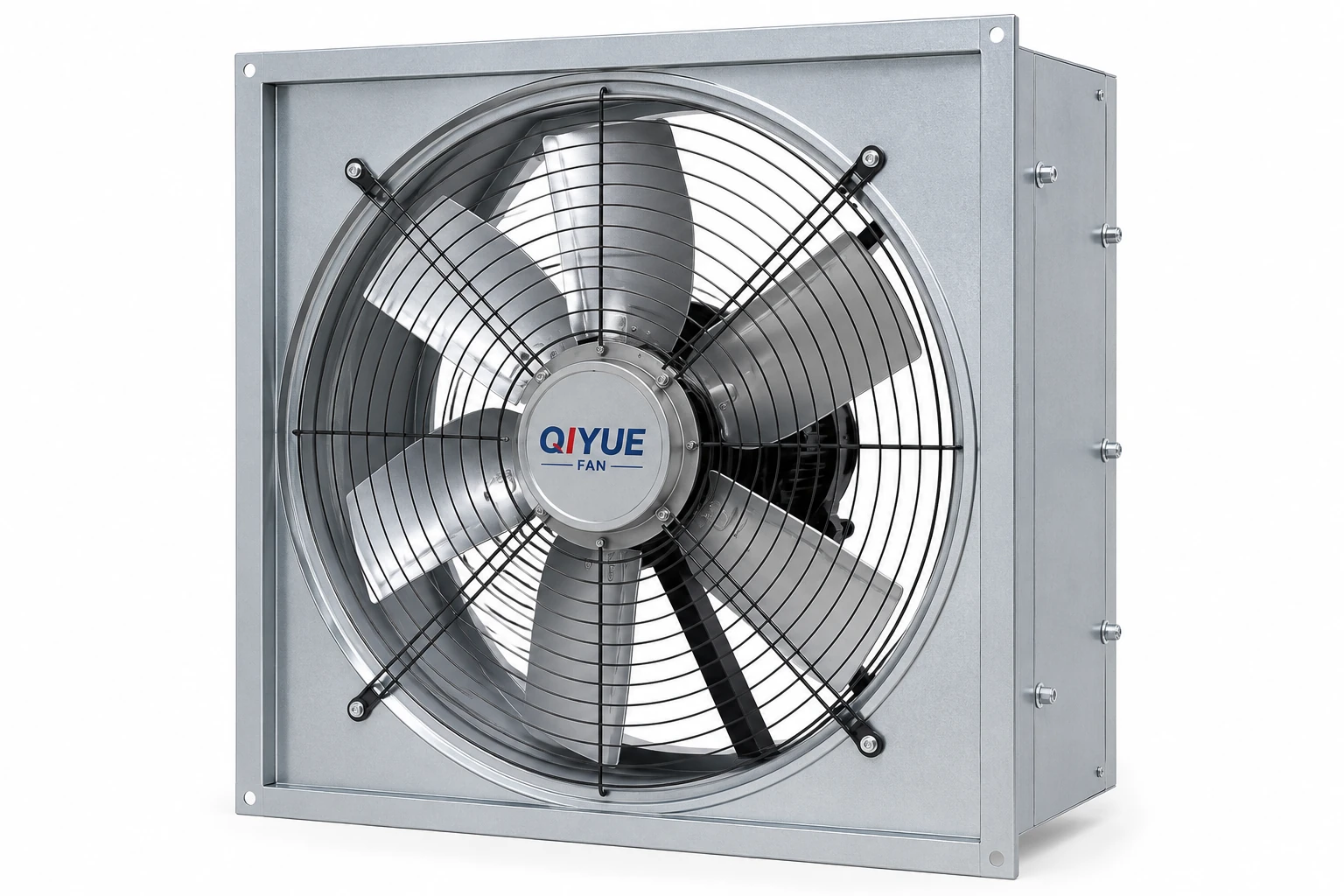
For open workshops, warehouses and production halls, axial flow fans are often used when the main requirement is large-volume air exchange, heat removal and continuous ventilation with relatively low system resistance.
When extreme heat increases ventilation demand, buyers should confirm workshop size, heat source, installation wall position, airflow direction, fan quantity, voltage and control method before quotation.
From Heat Problem to Fan Direction
QIYUE FAN helps buyers review whether a project needs general air exchange, ducted exhaust, high-pressure ventilation or high-temperature air movement before recommending a fan direction.
Ventilation Problem Review
Identify whether the problem is heat accumulation, poor air exchange, equipment cooling or local exhaust.
Fan Type Direction
Review whether axial flow fans, centrifugal fans or high-temperature fans are more suitable.
Airflow and Pressure Review
Match air volume, duct resistance, installation direction and control method with the site condition.
Quotation Support
Prepare fan model direction, motor power, performance reference and technical discussion before quotation.
Fan Products and Systems for Industrial Cooling and Ventilation
FAQ About Extreme Heat and Industrial Ventilation Fans
Can industrial ventilation fans replace air conditioning?
Not always. Ventilation fans remove heat and improve air exchange, but they do not provide refrigeration like air conditioning. In many industrial spaces, fans are used as part of a broader cooling and ventilation strategy.
Which fan type is suitable for workshop cooling?
Open workshops often use axial flow fans for large-volume air exchange, while ducted exhaust or high-resistance systems may need centrifugal fans. Final direction depends on airflow, pressure and layout.
What data is needed before a cooling fan quotation?
Send workshop size, heat source, target airflow, duct layout, resistance components, ambient temperature, required control method, voltage and quantity.
Why does heat make fan efficiency more important?
When fans operate for longer periods during hot seasons, energy consumption becomes more visible. Correct airflow and pressure matching can reduce unnecessary power use.
How can QIYUE FAN help with workshop ventilation planning?
QIYUE FAN can review the workshop layout, heat source, airflow route and pressure condition before recommending axial flow fans, centrifugal fans or high-temperature exhaust fan directions.
Send your building size, heat source, airflow target, duct layout and power standard. QIYUE FAN can help review the suitable industrial ventilation fan direction before quotation.