

Understanding Axial Airflow Before Fan Selection
An axial flow fan moves air mainly parallel to the rotational axis of the impeller. This straight-through airflow path makes axial fans widely used for ventilation, cooling, air exchange, duct systems and specialized mine and tunnel ventilation duties.
What Is an Axial Flow Fan?
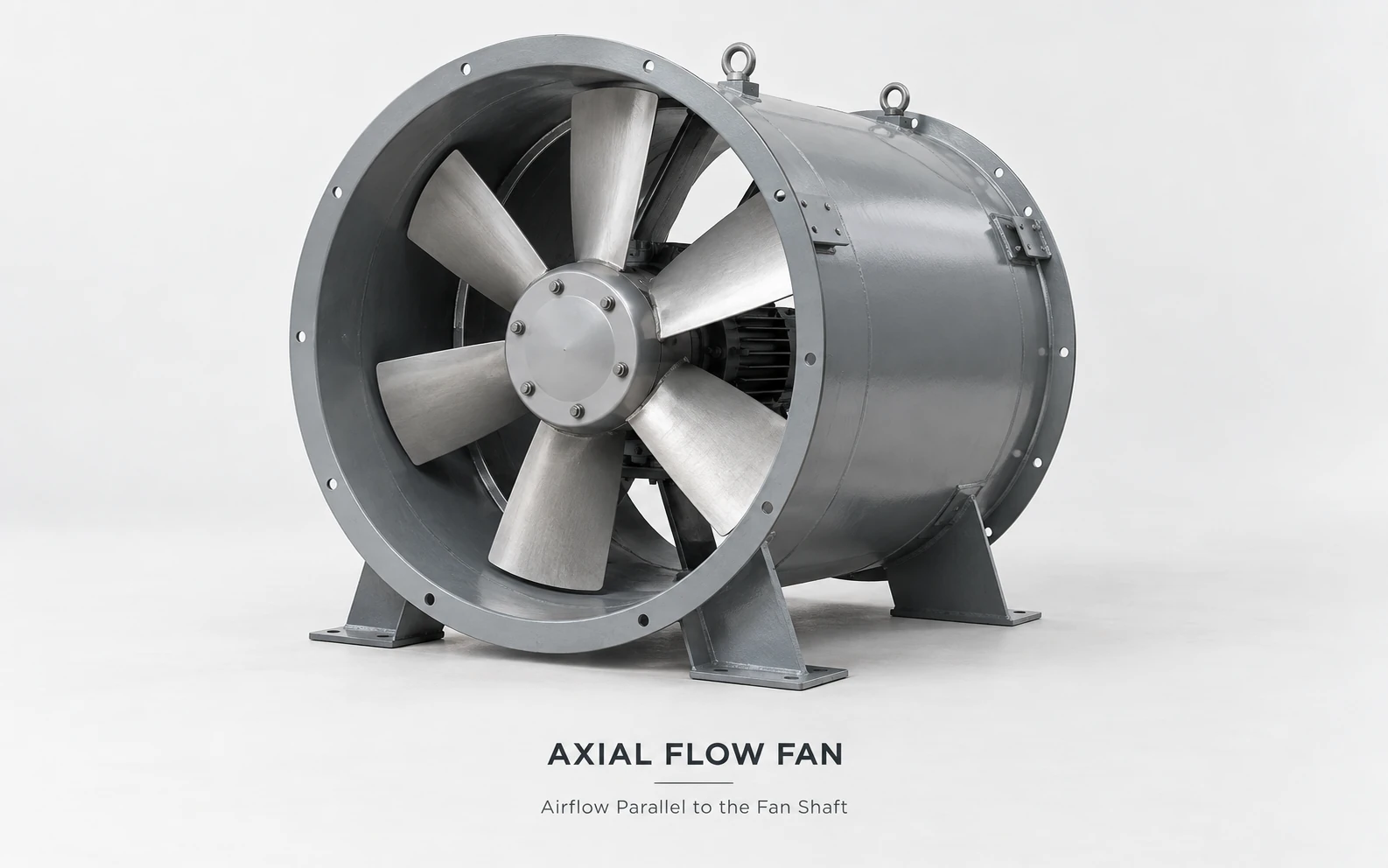
An axial flow fan is a fan in which the main airflow direction is approximately parallel to the fan shaft. As the impeller rotates, its blades transfer mechanical energy to the air, producing airflow and a pressure rise while the main flow continues in the axial direction.
Why Is It Called "Axial Flow"?
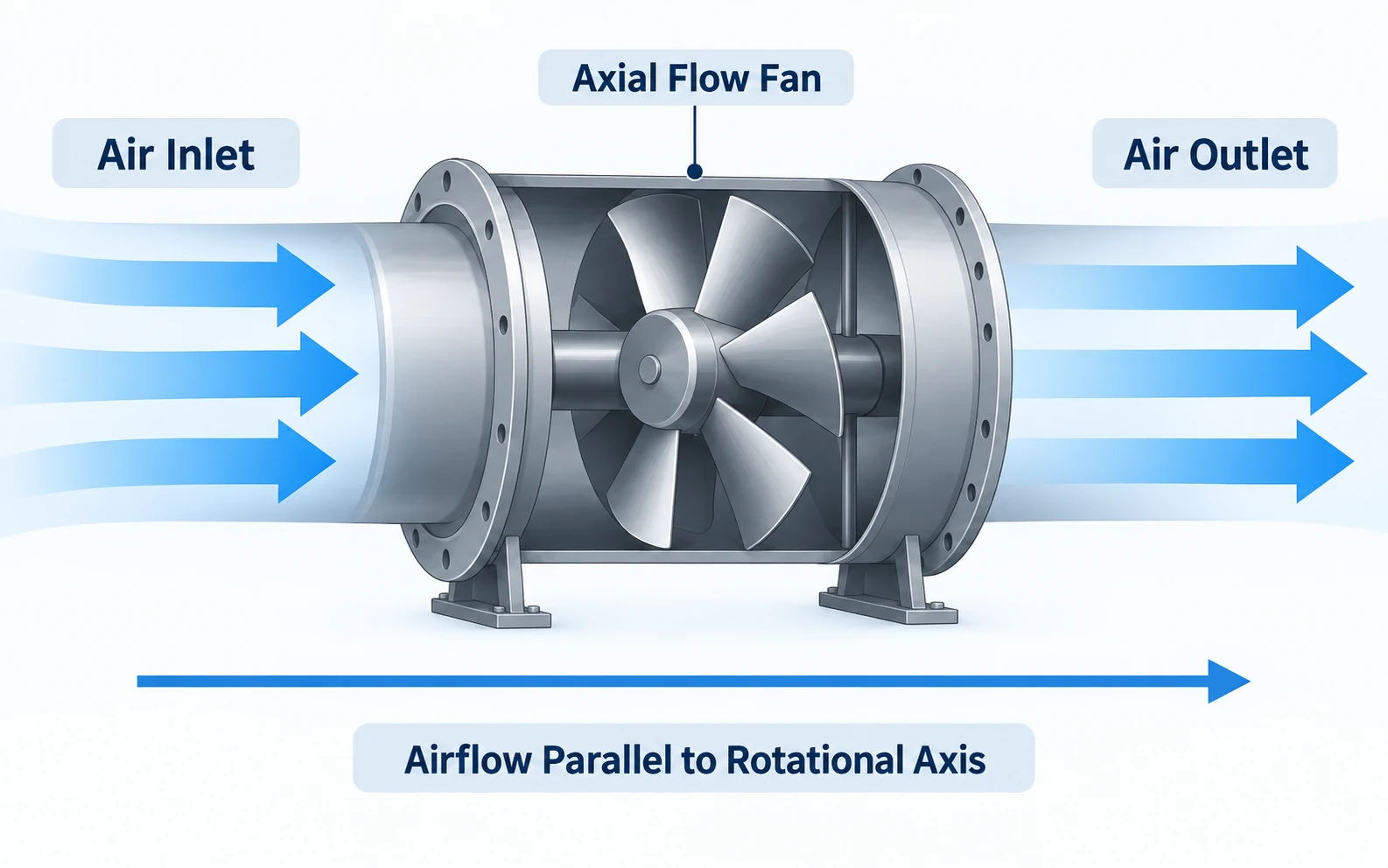
The word axial refers to the axis of rotation. In an axial fan, air enters and leaves mainly along this axis. The airflow path therefore remains generally straight through the fan instead of being turned approximately 90 degrees as happens inside a centrifugal fan.
How Does an Axial Flow Fan Work?
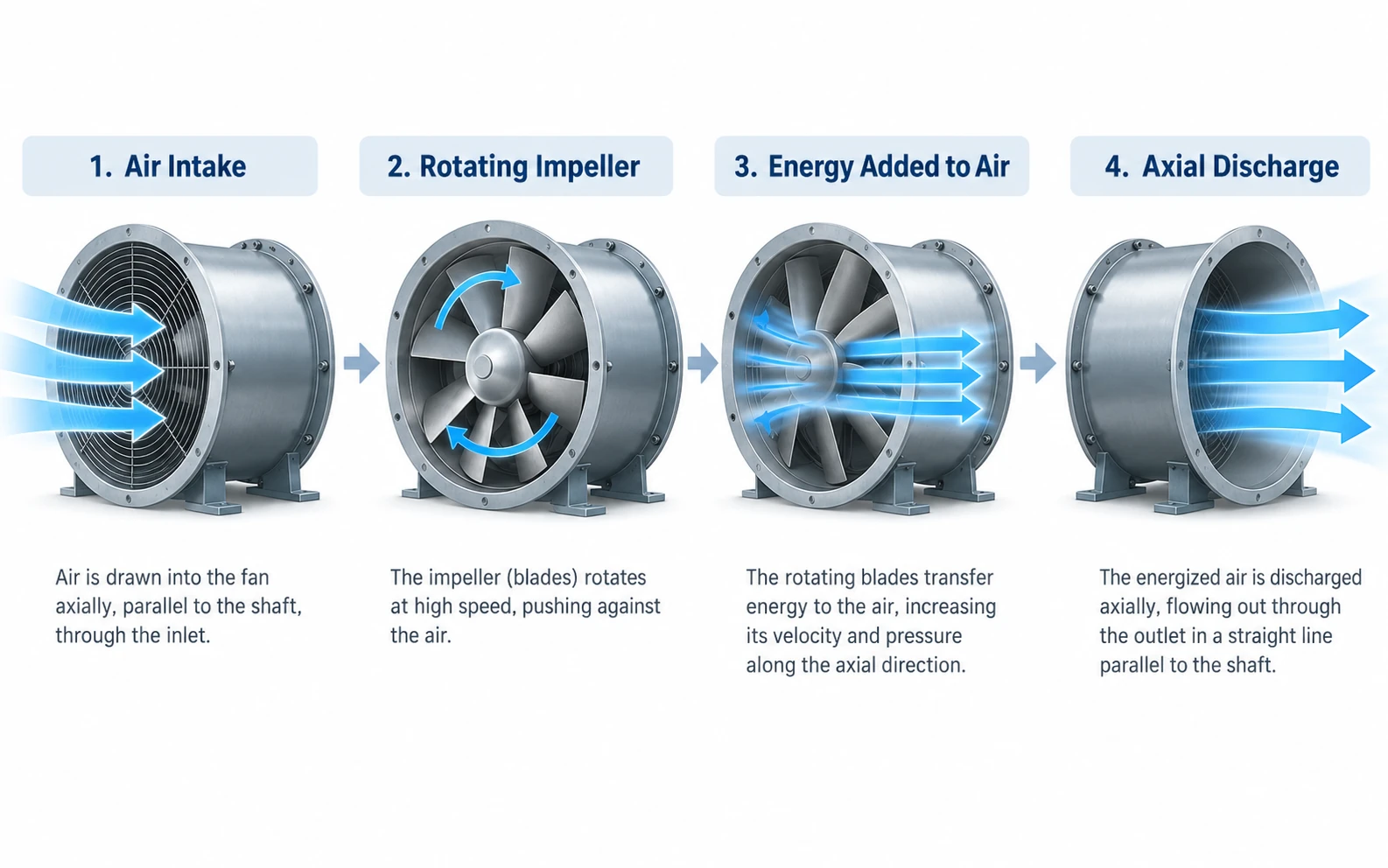
The rotating impeller blades create aerodynamic forces that transfer energy to the air. The air enters the fan, passes through the rotating blade region and leaves mainly along the axis. The exact airflow, pressure and power demand depend on the fan geometry, rotational speed and the resistance of the connected system.
Main Types of Axial Flow Fans
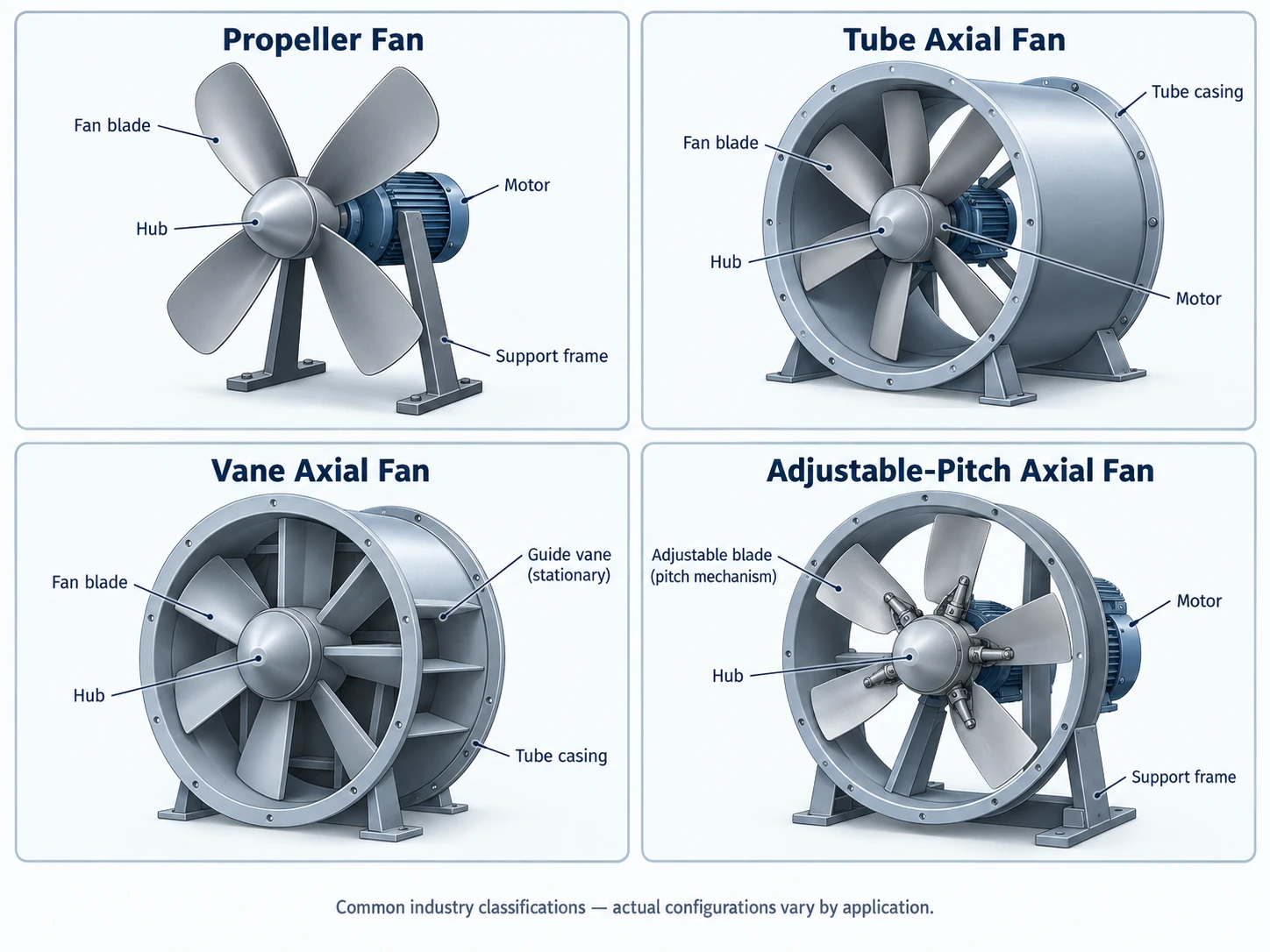
Axial fans can be classified by casing, guide-vane arrangement, blade configuration and pitch control. The illustrations below show common industry concepts rather than specific QIYUE FAN models.
Axial Fan Airflow and Pressure Characteristics
Axial fans are often associated with high airflow and low-to-moderate system resistance, but this is only a general rule. Specialized vane-axial, mine, tunnel and other industrial designs can operate at substantially different pressure levels.
| Factor | Meaning | Why It Matters |
|---|---|---|
| Airflow | Volume of air delivered, normally expressed in m³/h, m³/s or CFM. | Must satisfy ventilation, cooling or process demand. |
| Pressure | Pressure available to overcome the resistance of the connected system. | Long ducts and restrictions can change the required fan design. |
| Speed | Rotational speed of the impeller. | Influences airflow, pressure, power and noise. |
| Operating Point | The point where fan capability meets system resistance. | This should determine final fan selection. |
Where Are Axial Flow Fans Used?
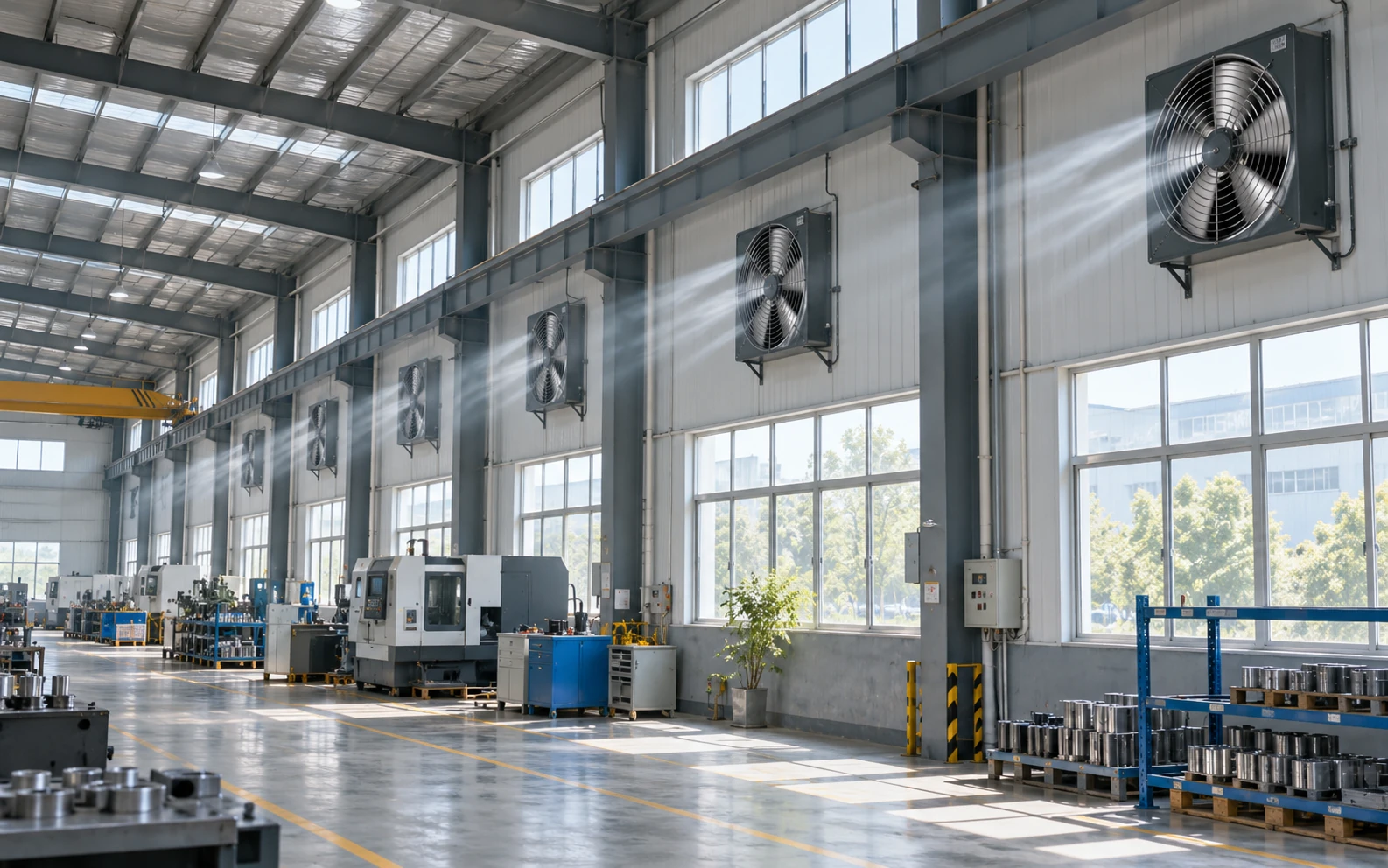
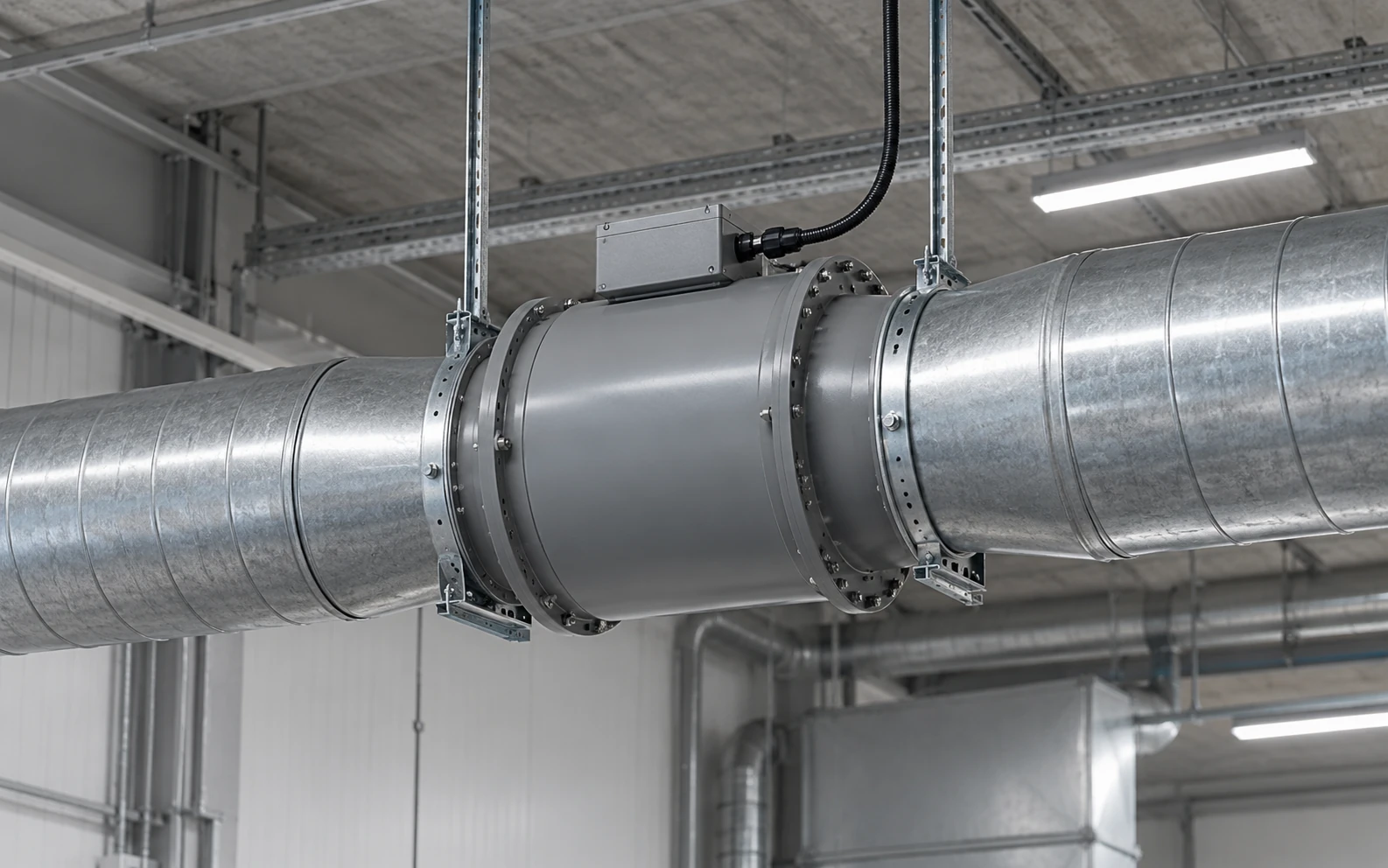
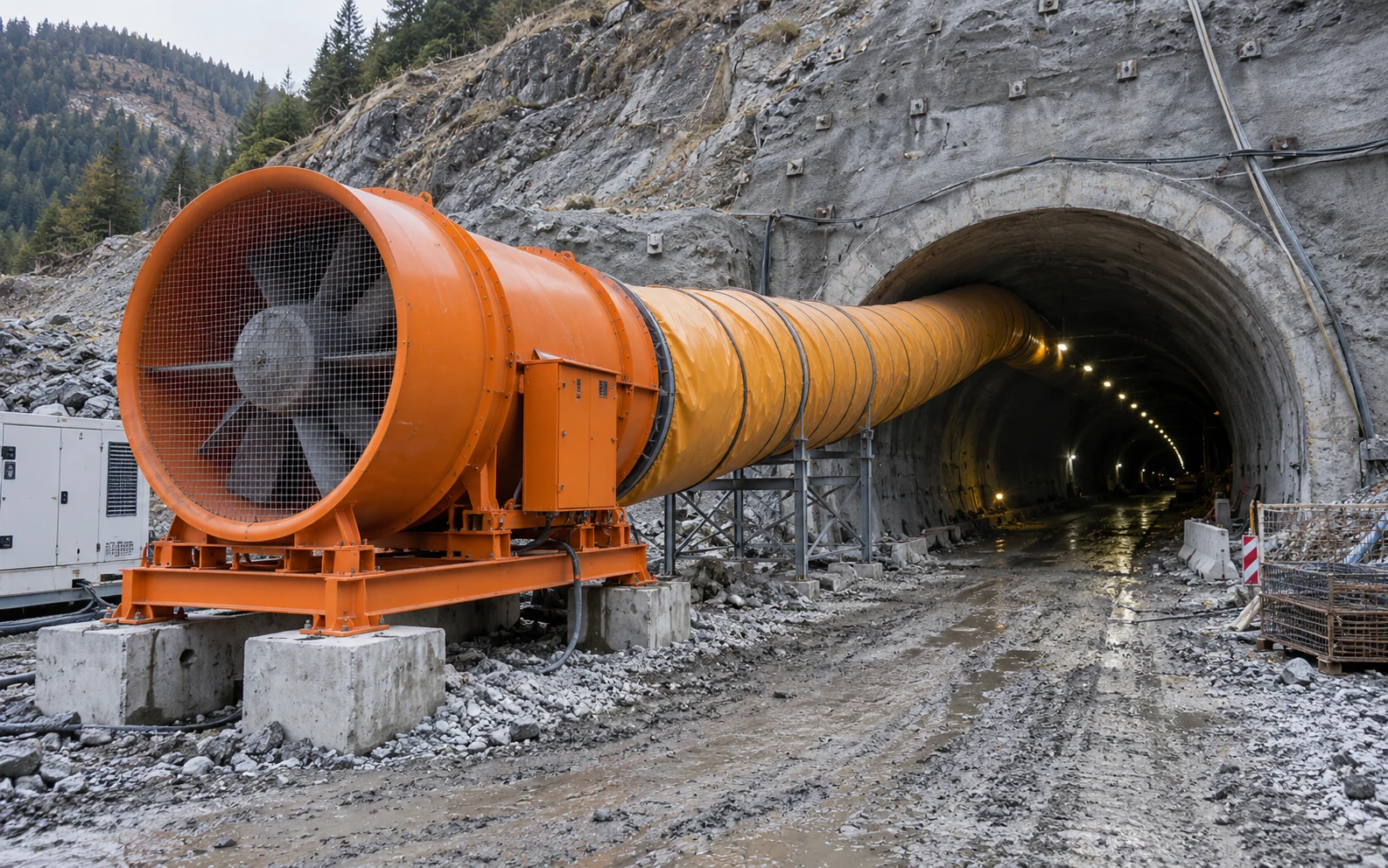
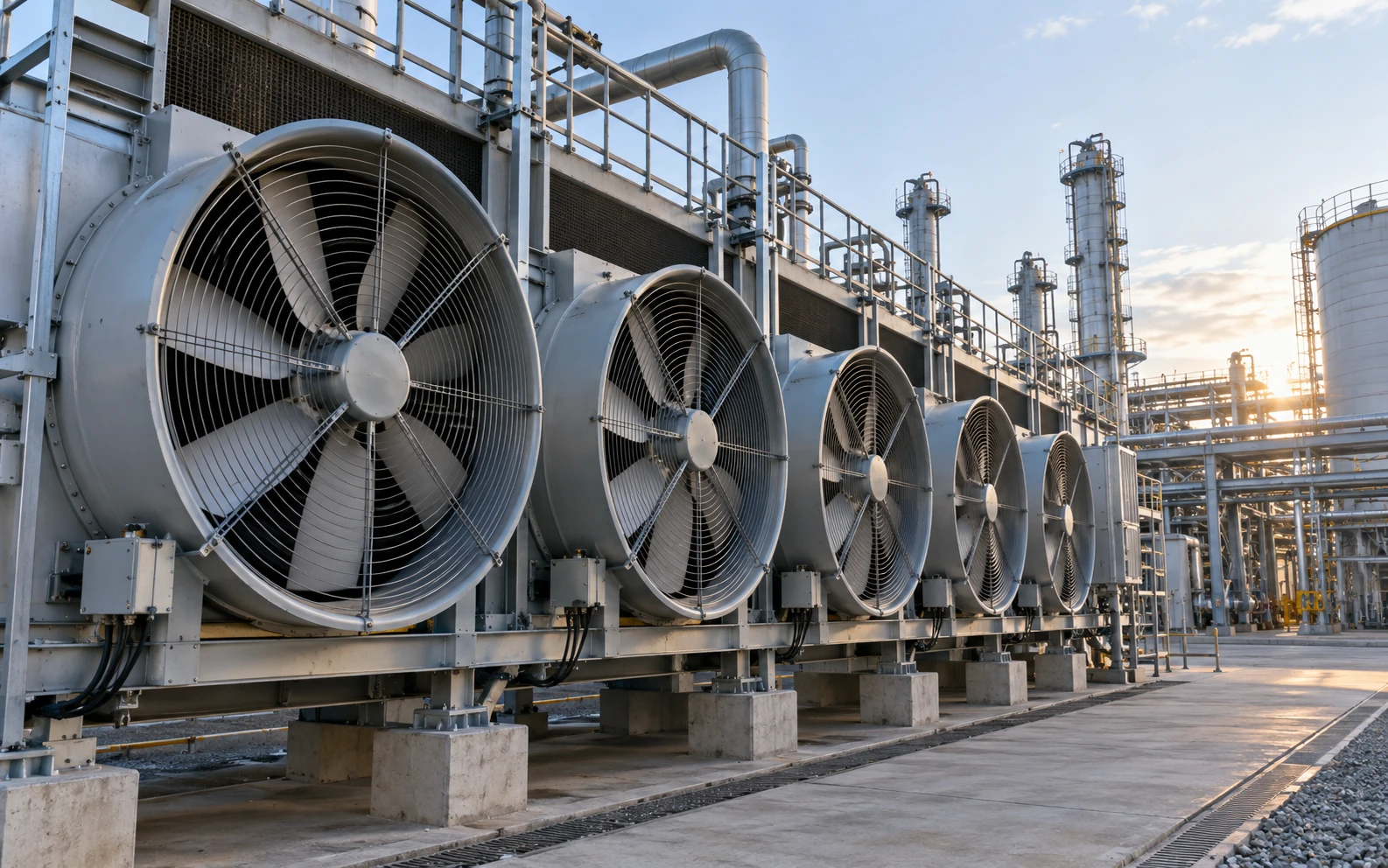
Axial fan applications range from general industrial air exchange to specialized duct and tunnel ventilation. The installation arrangement can be completely different even though the basic axial airflow principle is similar.

Other Axial Fan Duties
Depending on fan construction and operating conditions, axial fans may also be used for equipment rooms, warehouses, roof ventilation, cooling systems and specialized mine ventilation.
View Axial Flow Fans →Axial Fan vs Centrifugal Fan
The fundamental difference is the airflow path. An axial fan moves air mainly along the shaft, while a centrifugal fan redirects the air through the impeller and discharges it through a separate outlet.
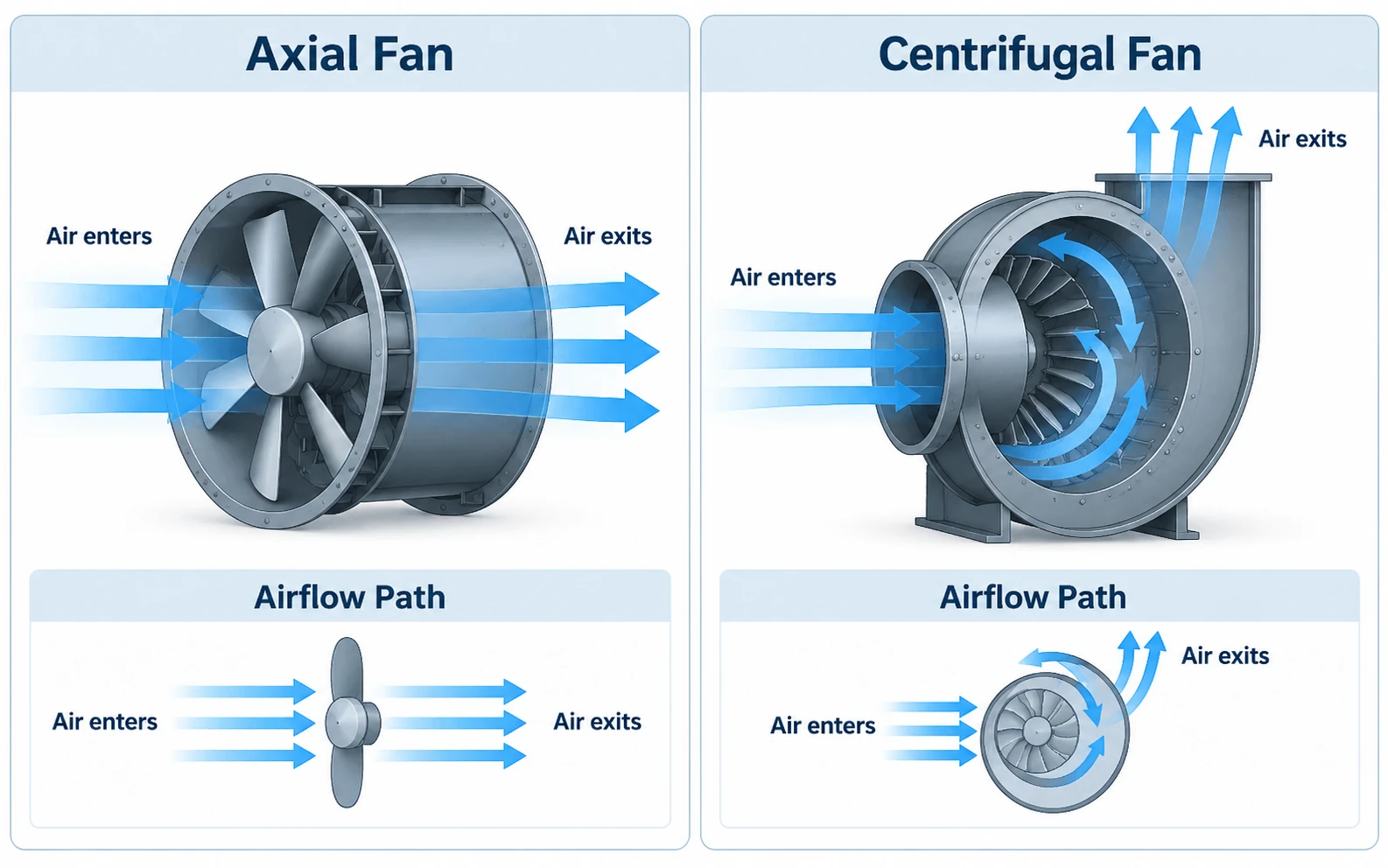
| Comparison | Axial Fan | Centrifugal Fan |
|---|---|---|
| Airflow Path | Mainly parallel to the fan shaft | Air changes direction through the impeller |
| Typical Strength | High-volume straight-through airflow | Wide pressure range and process flexibility |
| Installation | Inline, wall, roof or tunnel arrangements | Volute casing with directional discharge |
| Typical Duties | Ventilation, cooling and air exchange | Dust systems, boilers, process gas and higher-resistance ducts |
When May an Axial Fan Not Be the Best Choice?
Large airflow alone does not automatically mean an axial fan is suitable. Applications with substantial resistance or demanding gas conditions may require a different fan type or a specialized axial design.
- Long or complex duct systems with high pressure loss
- Baghouse filters and high-resistance filtration systems
- High-pressure process air duties
- Heavy particulate handling applications
- Certain high-temperature or highly corrosive gas conditions
- Applications requiring a specific centrifugal discharge arrangement
What Information Is Needed to Select an Industrial Axial Fan?
Final fan selection should be based on the actual operating duty rather than fan diameter or motor power alone.
Continue From Fan Fundamentals To Real Applications
Use these related pages to move from the basic airflow principle into product families, ventilation systems and real engineering selection.
Underground and long-duct ventilation fan systems.
Large-space industrial ventilation and air exchange.
Airflow, ducting and temporary ventilation during tunnel construction.
Frequently Asked Questions About Axial Flow Fans
What is an axial flow fan?
An axial flow fan is a fan in which air moves mainly parallel to the rotational axis of the impeller.
What is the working principle of an axial fan?
Rotating impeller blades transfer energy to the air, creating airflow and pressure while the main flow remains approximately along the fan shaft.
Which direction does air flow through an axial fan?
The principal airflow direction is approximately parallel to the fan shaft.
Are axial fans low-pressure fans?
Many general ventilation axial fans operate in low-to-moderate resistance systems, but specialized mine, tunnel and vane-axial designs can operate at much higher pressures.
What are the main types of axial flow fans?
Common classifications include propeller fans, tube axial fans, vane axial fans and fixed- or adjustable-pitch axial designs.
Can an axial fan be installed in ductwork?
Yes. Tube axial and other inline designs are widely used in ducts, provided the selected fan can overcome the actual duct-system resistance.
How are axial fans used during tunnel construction?
Construction ventilation fans are commonly connected to flexible ducting to deliver fresh air toward the working face and remove contaminated or heated air from the tunnel.
How are jet fans used in completed road tunnels?
Jet fans are mounted near the tunnel ceiling to generate longitudinal thrust and may be installed in pairs at intervals for normal ventilation and smoke-control duty.
What is the difference between an axial fan and a centrifugal fan?
An axial fan moves air mainly along the shaft direction, while a centrifugal fan redirects air through the impeller before discharging it from a separate outlet.
How do I select an industrial axial flow fan?
Start with required airflow and pressure, then confirm duct resistance, gas temperature, medium, installation method, voltage, frequency and other site conditions.
The terminology and engineering principles in this guide follow commonly accepted industrial fan concepts, including axial airflow, system resistance, operating-point selection and conventional axial fan classifications. Actual fan construction and performance depend on the specific design.
From Axial Fan Fundamentals to the Actual Operating Point
For an industrial axial fan project, provide the required airflow, pressure, duct or installation data, gas temperature, medium, voltage, frequency and quantity. QIYUE FAN can review the operating condition before confirming a suitable fan direction.
Send Fan Requirements →